
What is the Carthusian Horse
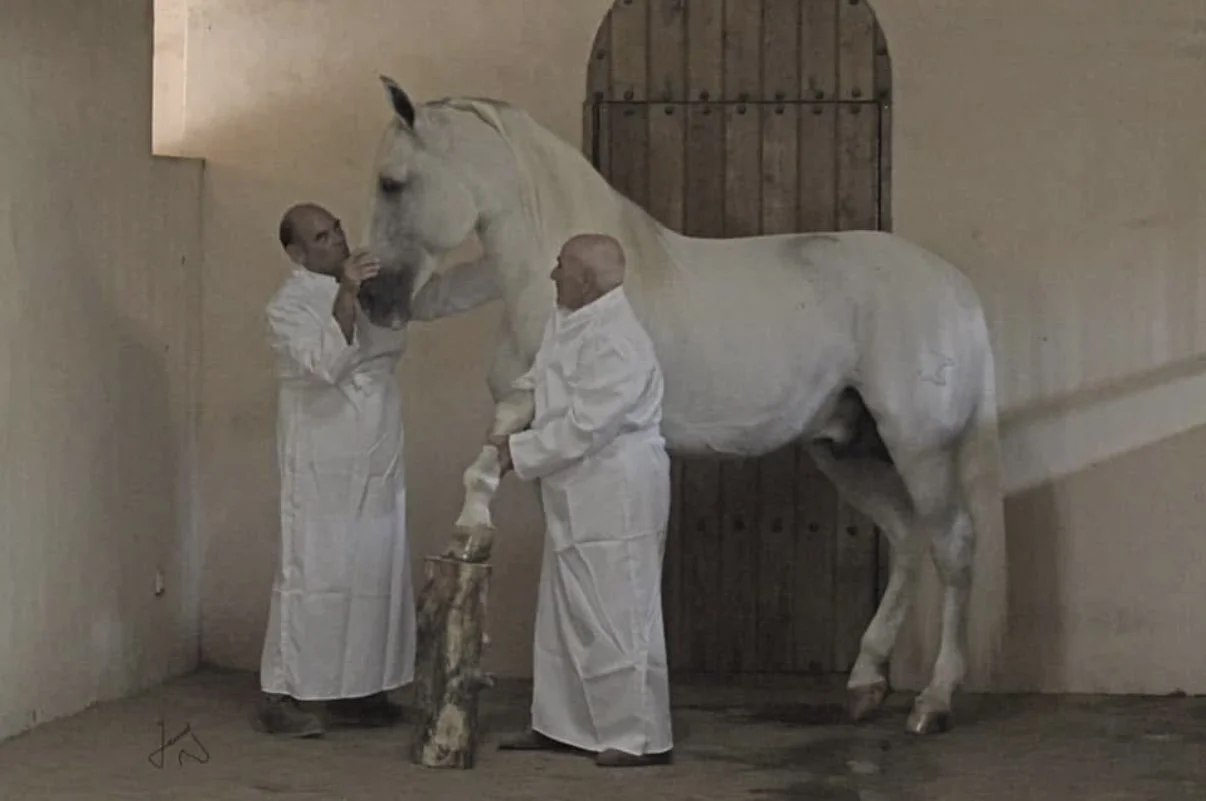
The Carthusian, or Cartujano, horse traces its history to the Carthusian monastery of Santa María de la Defensión in Jerez de la Frontera, Andalusia, where the monks established their horse-breeding tradition that would become an enduring legacy..
In 1484, the monks undertook the deliberate breeding of horses from Andalusian mares of the surrounding region. Guided by intuition, intention, and prayer, the monks developed this bloodline through successive generations.
This was breeding on a profoundly different timescale from that of the modern world. Their work was measured not in years, but in generations. They observed their horses throughout their lives and maintained careful records; retaining and breeding those that best embodied the qualities they sought, and repeated the process throughout generations. Through this patient process of selection, they progressively refined a distinct type of Spanish horse; one characterized by beauty, harmony, nobility, intelligence, character and an unmistakable quality of presence.
The importance of this work is made even clearer by the fact that the breeding stock remained under the care of the single institution for approximately 326 uninterrupted years, from 1484 until 1810. For more than three centuries, the Carthusian monks themselves were the custodians, breeders and arbiters of this bloodline. During this time, the horses were protected from the external influences that so often reshape a breed. The monks could continue selecting according to their own ideals, generation after generation, creating a population that became increasingly distinct.
In 1810, the survival of the Carthusian horses was suddenly placed in jeopardy by the arrival of French troops during the Peninsular War. With the monastery and its livestock threatened, the monks arranged for D. Pedro José Zapata Caro, a priest and prominent local livestock breeder who was a friend of the prior, to acquire a group of the mares and stallions.
For the next two centuries, the Carthusian horses passed through the hands of a relatively small number of breeders and families who dedicated themselves to continued preserving the stock. The lineage repeatedly faced the possibility of dispersal, dilution or disappearance, yet portions of the original breeding population continued to be protected.
By the twentieth century, the surviving Carthusian horses had become recognized as something exceptionally rare; a population carrying the legacy of centuries of deliberate selection under the Carthusian monks, followed by generations of breeders who understood that they were custodians of something that could not simply be recreated once lost.
The significance of this lineage is not simply the rarity of an old pedigree. It is the rarity of a specific breeding tradition, carried forward from the monastery at Jerez and preserved through generations of people who understood the value of maintaining what the monks had created.
The Carthusian monks did not merely leave behind old horses. They left behind a living remnant of a breeding program that began more than five centuries ago, under a single uninterrupted breeding philosophy, shaped by intuition, intention, and patience.
This is what makes the Cartujano so extraordinary; and is why I am so passionate about preserving and protecting this bloodline for future generations.
Our foundation bloodlines
Ardiendo Studs foundation mares bring together four distinctive family bloodlines deriving from some of the most successful and historically significant breeders.
Isabel Merello (Viuda de Terry)
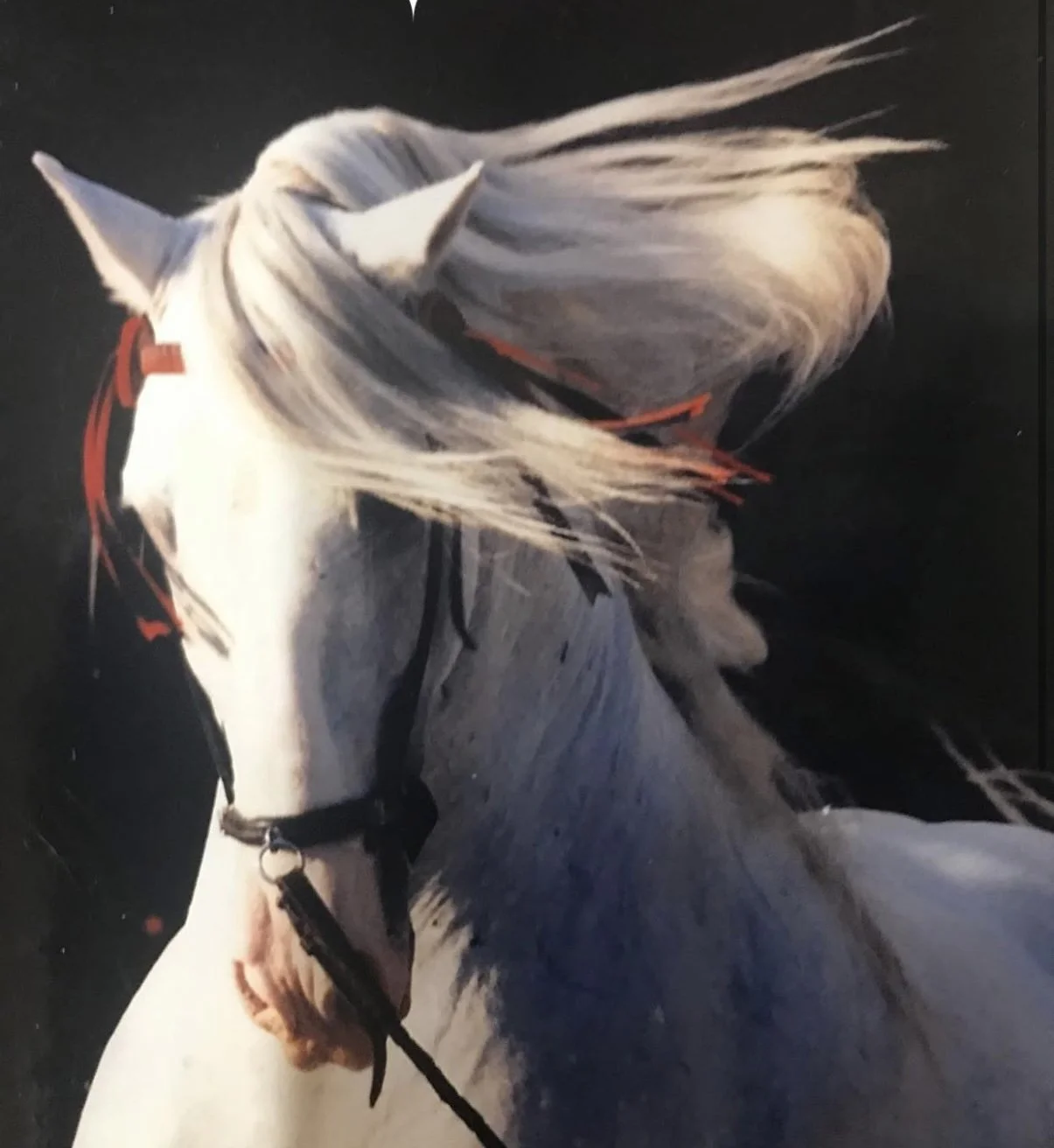
Belico III
Few names in the modern history of the Carthusian horse carry greater significance than Doña Isabel Merello Álvarez-Campana, Viuda de Terry. Her name is inseparable from the preservation of the historic Hierro del Bocado, the principal surviving line of the Carthusian horse descended from the breeding program established by the Carthusian monks of Jerez de la Frontera.
Following the French invasion of 1810 and the departure of the monks from the Cartuja de Jerez, the survival of their horses depended upon a succession of dedicated private breeders who acquired and protected the remaining stock. In the 1940s, Fernando C. de Terry y del Cuvillo acquired the historic Hierro del Bocado herd. Following his death, his widow Isabel Merello continued the breeding program for approximately three decades, becoming one of the most important custodians of the Carthusian strain. The modern Yeguada Cartuja Hierro del Bocado traces its horses directly through this succession of breeders.
Her breeding program was formally recognized by the Spanish Ministry of Agriculture in 1958 as a Ganadería Diplomada, and her horses achieved distinction in national agricultural exhibitions and Spanish horse competitions. Among them were Descarado II, Insidioso III, Faraón V and Gorrón III, all recognized with first prizes during the period of her stewardship.
The significance of the Isabel Merello (Viuda de Terry) line is therefore not simply that it contains Carthusian influence; it represents a direct continuation of the historic Cartujano breeding tradition, carrying forward the genetics and type developed by the Carthusian monks over centuries. It brings to the Ardiendo program a connection to one of the deepest foundations of the Pura Raza Española: the refinement, substance, racial character, balance and unmistakable presence of the historic Carthusian horse.
Yegunda Guardiola Fantoni
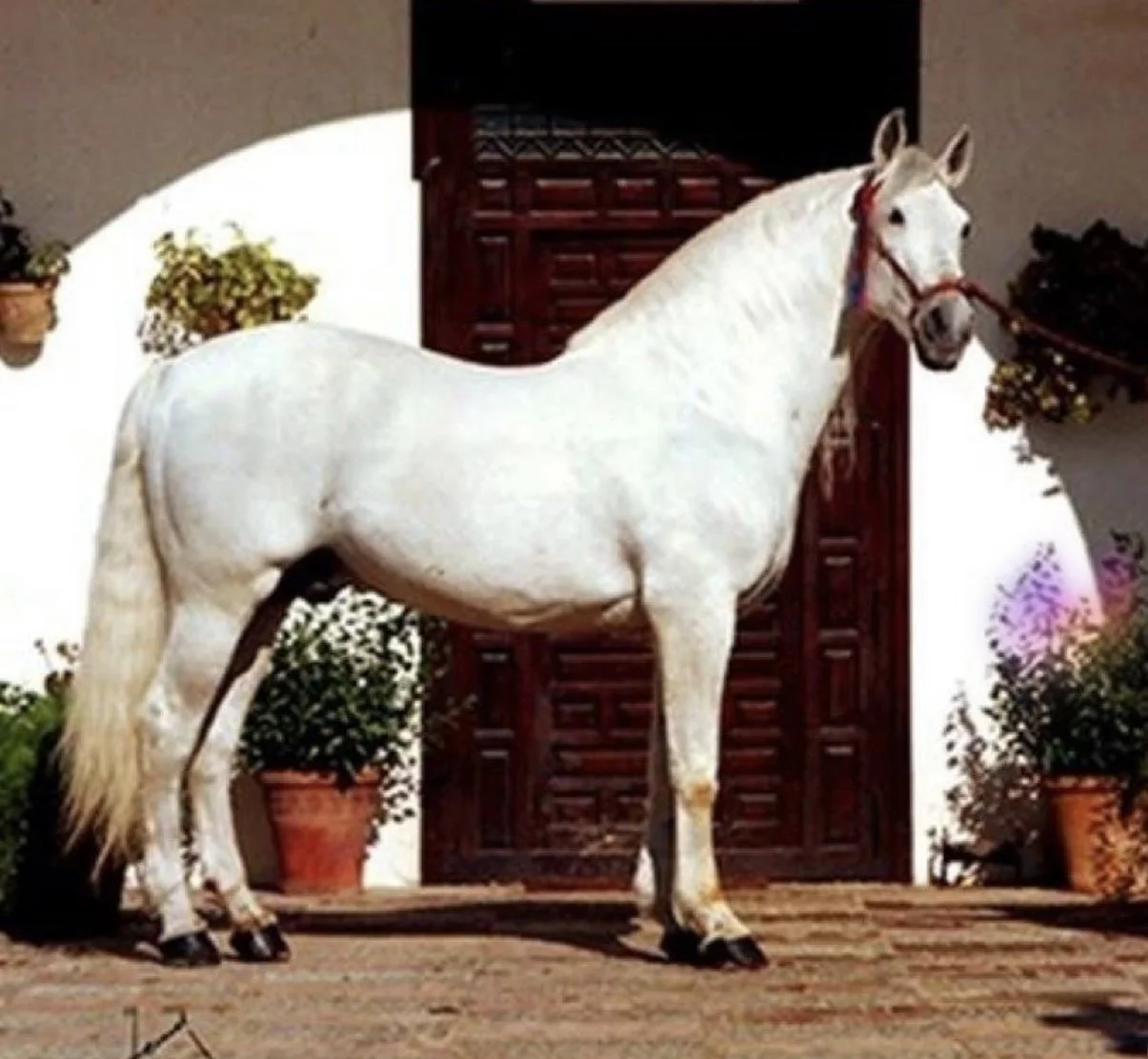
Maromito V
The Guardiola family represents one of the oldest continuous horse-breeding traditions in Spain, with documented origins in Utrera dating to 1690. For centuries, the family maintained its own horses, and in the early twentieth century a substantial portion of the family’s breeding stock came from a clearly Carthusian-descended population. In 1943, Salvador Guardiola Fantoni further developed the stud with a significant acquisition of mares from the Osborne breeding program, establishing the foundation of the modern Guardiola line.
The Carthusian influence became particularly important in the mid-twentieth century, when Guardiola incorporated celebrated Hierro del Bocado stallions including Cariñoso III and Gorrón II. Their blood was consolidated through the famous Guardiola stallion Maromo, who was by Gorrón II and out of a mare by Cariñoso III. Maromo subsequently became one of the defining sires of the Guardiola family.
What Guardiola contributes, therefore, is not simply Carthusian ancestry, but a centuries-old Spanish breeding tradition in which that Carthusian blood was selected alongside strength, substance and functionality. The Guardiola family’s own stated selection criteria emphasize beauty and racial expression together with strong limbs, expressive and cadenced movement, durability, versatility and the ability to work in the field.
This is the Guardiola influence present in Gala Mater through her dam Triunfadora XXX: Triunfadora is by Maromito V, who is by Centella V, who is by Maromo.
Yeguada Romero Benítez
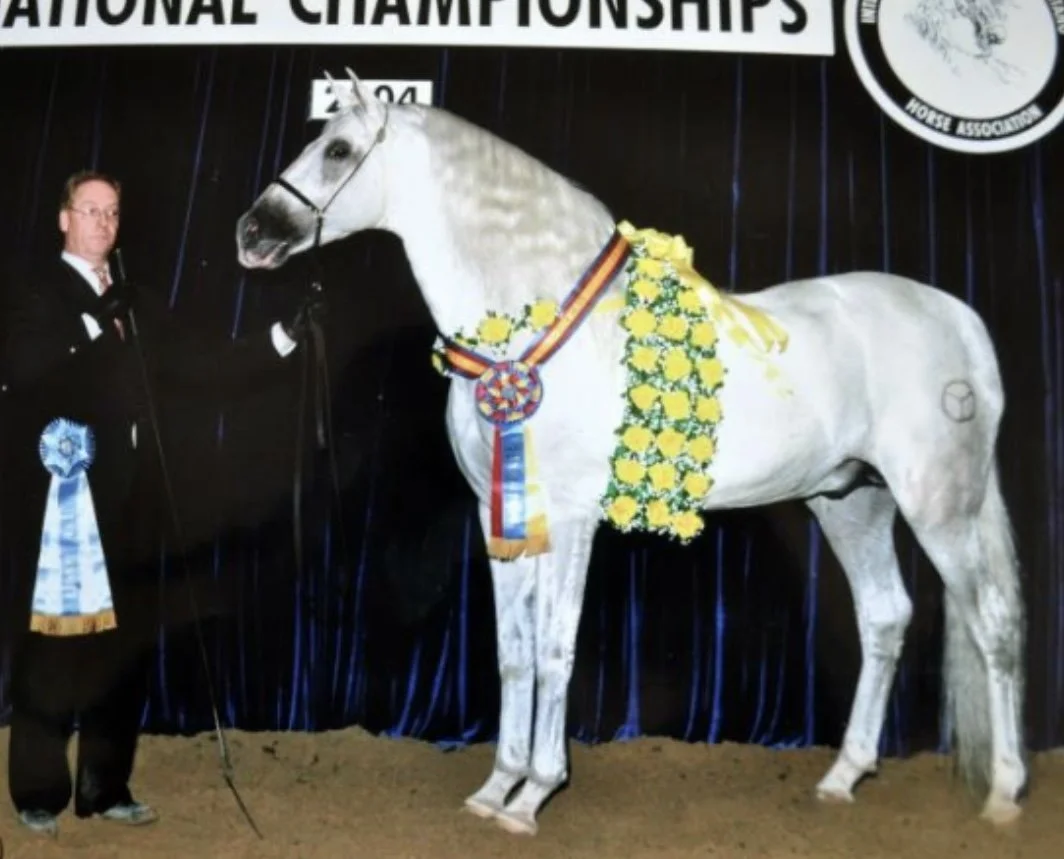
Ocioso VIII
The history of Romero Benítez is particularly important because it represents one of the old surviving branches of the Carthusian story outside the principal Bocado line.
The breeding program dates to 1854, and its origins are tied to Cristóbal Romero Zarco, who acquired Carthusian mares from Pedro Zapata. The lineage was subsequently developed by the Romero family, with Rafael Romero Benítez returning directly to the Bocado stock and acquiring more than twenty mares and two stallions. The family continued to guard this type at a time when many Spanish breeders were introducing outside blood in an effort to alter the horse for greater speed or other purposes.
That decision became one of the defining characteristics of Romero Benítez. The family deliberately remained attached to the traditional Spanish horse, preserving a type that contemporary accounts describe in terms of purity, beauty and historical character. This makes the line particularly interesting from a preservation perspective: its importance lies not only in having Carthusian ancestry, but in the family’s historical determination not to abandon that old genetic identity in pursuit of fashion or modernization.
The Romero Benítez contribution is consequently one of old Spanish type, purity, refinement and genetic preservation. It is a different historical branch from the later Terry/Bocado concentration represented by Vilaire, and that distinction is precisely what makes it valuable.
Yeguada Vilaire
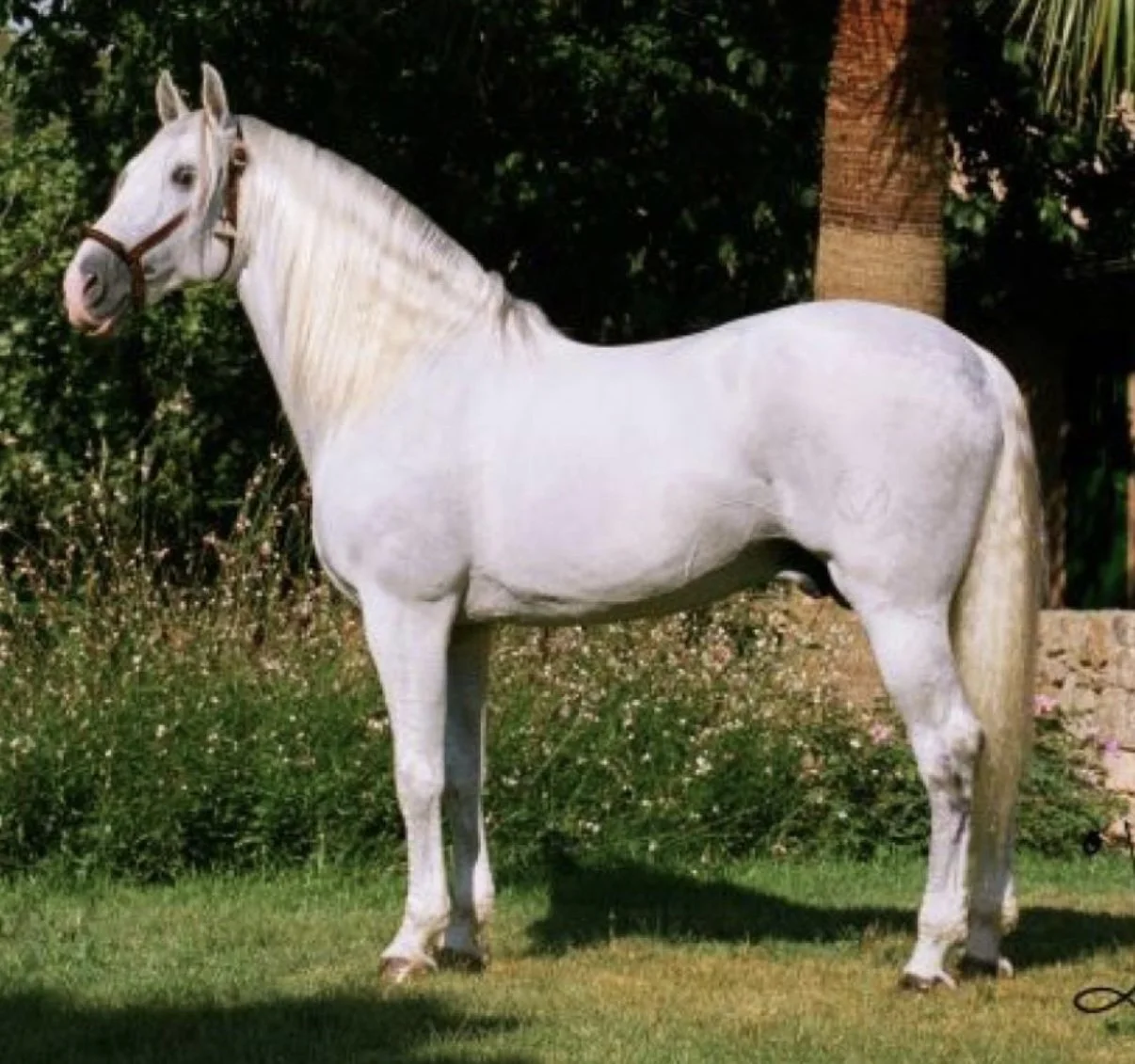
The modern history of Yeguada Vilaire begins in 1980, when its foundation mare, Uraña II, was acquired. The program was subsequently strengthened with mares from José Luis Marín García, including Cuerda and Canuta, and in 1987 with the acquisition of Bélico III and Ibérico VIII from RUMASA.
Bélico III became fundamental to Vilaire. He was one of the last stallions bred by the widow of Terry, and was a son of Habanero XI, a highly important Bocado line. Vilaire specifically credits Bélico III with transmitting beauty, racial fidelity and strength to his descendants.
His greatest legacy within Vilaire was Judío VII, whose dam, Cuerda, introduced another important layer of old Spanish blood through Albero II and Yaca III. Vilaire describes Cuerda as an exceptionally strong mare, while Judío VII himself combined racial quality, strength and movement.
Vilaire therefore represents a particularly concentrated modern continuation of the Terry → Bocado → Bélico III → Judío VII tradition, while simultaneously incorporating strong Spanish families outside that direct Carthusian branch.
That makes Ojiva de Vilaire especially interesting: she is by Judío VII and out of another Vilaire mare, Fragosa VIII, meaning that the Vilaire breeding philosophy is represented strongly on both sides of her immediate pedigree.